
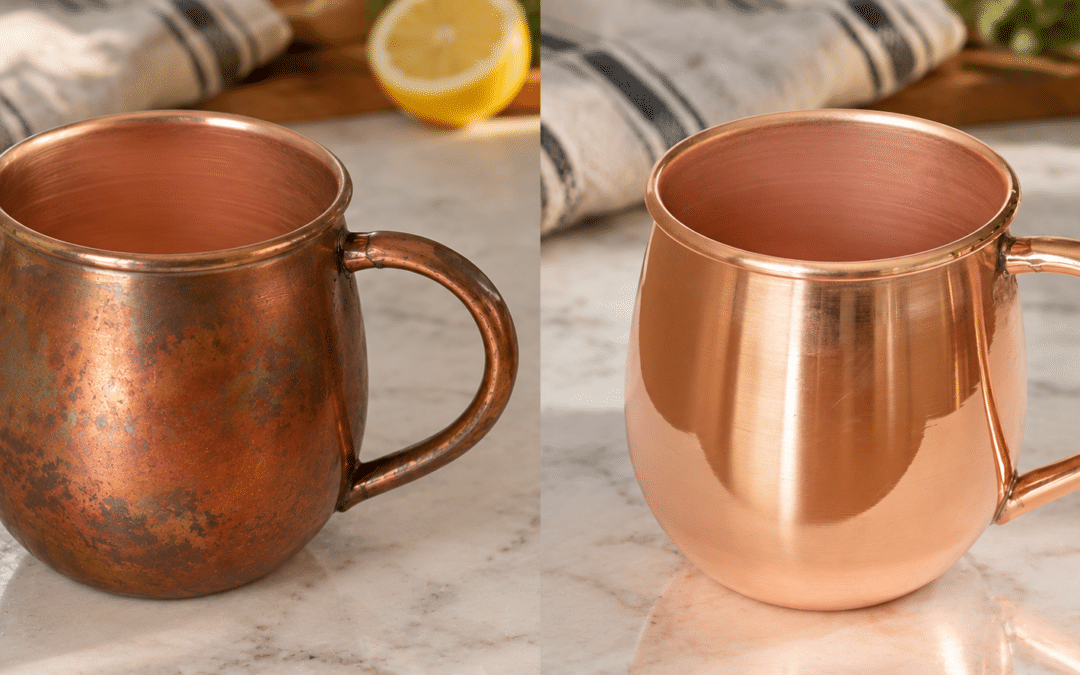
What to Expect from Pure Copper
Copper naturally reacts with air, moisture and the liquids it comes into contact with. This process, known as oxidation, can cause changes in colour, loss of shine and the gradual development of a patina. As our products are handcrafted, you may also notice slight variations in colour, texture or finish. These characteristics are a natural result of the artisanal manufacturing process and help make each piece unique.
In fact, changes in the appearance of copper over time are one of the natural characteristics of this material. Genuine copper evolves with use and exposure to its environment, gradually developing its own distinctive tones and patina.
IMPORTANT: Do not put copper utensils in the dishwasher or microwave. Take care with hot drinks: copper conducts heat very quickly, so the mug and handle can become hot and may cause burns.
Signs of Copper Oxidation
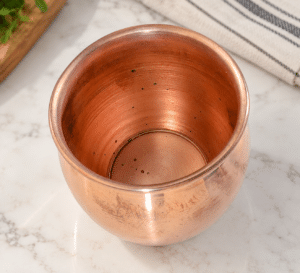
When copper is exposed to oxygen, moisture and everyday use, its surface naturally begins to change. These changes may appear as:
* brown or dull areas;
* dark spots;
* black marks;
* changes in colour.
The presence of certain elements in the environment, such as sulphur compounds in the air or minerals in water, can accelerate these changes and cause some areas of the copper to become darker. Em determinadas condições, estas alterações podem surgir mesmo após as primeiras utilizações.
Oxidation and the development of a patina are part of copper’s natural ageing process. Some people prefer to keep copper bright and shiny, while others appreciate the more aged and distinctive appearance created by the patina.
IMPORTANT: Natural changes in colour, loss of shine or the development of a patina do not, in themselves, constitute a manufacturing defect. São These are natural characteristics of genuine 99.9% pure copper used in our products, which naturally reacts with air, moisture and other substances present in the environment.
What to Avoid to Help Slow Down Oxidation
- Dishwashers
- Harsh chemicals or detergents
- Steel wool, scouring pads or abrasive products
- Leaving water or other liquids in the utensil for long periods
- Prolonged contact between unlined copper and acidic drinks, such as citrus juices or soft drinks
- Storing the item while it is still damp
What Can Accelerate Oxidation
- Exposure to air and moisture
- Water left on the surface or air-drying
- Contact with acidic substances
- Grease and fingerprints
- High-humidity environments
- High temperatures
How to Clean Your Copper Utensils Properly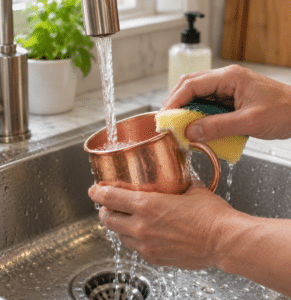
Proper care after each use helps preserve the appearance and finish of your utensils for many years. Routine cleaning is simple and similar for both pure copper and utensils with an interior tin lining., although tin, being a softer material, requires some additional care.
Routine Cleaning
For regular cleaning of your copper utensils:
- Hand wash with warm water and a small amount of mild detergent.
- Use a soft sponge or cloth and wash gently.
- Rinse thoroughly to remove all detergent residue.
- Dry immediately and thoroughly with a soft cloth.
Avoid: dishwashers, bleach, harsh chemicals, steel wool and abrasive scouring pads.
What If the Utensil Has an Interior Tin Lining?
The cleaning procedure is the same. However, tin is softer than copper and requires additional care to prevent scratches and wear to the lining.
On tin-lined interiors, use only soft sponges or cloths and avoid steel wool, abrasive scouring pads, metal utensils or other materials that could scratch the surface.
How to Remove Stains and Restore Copper’s Shine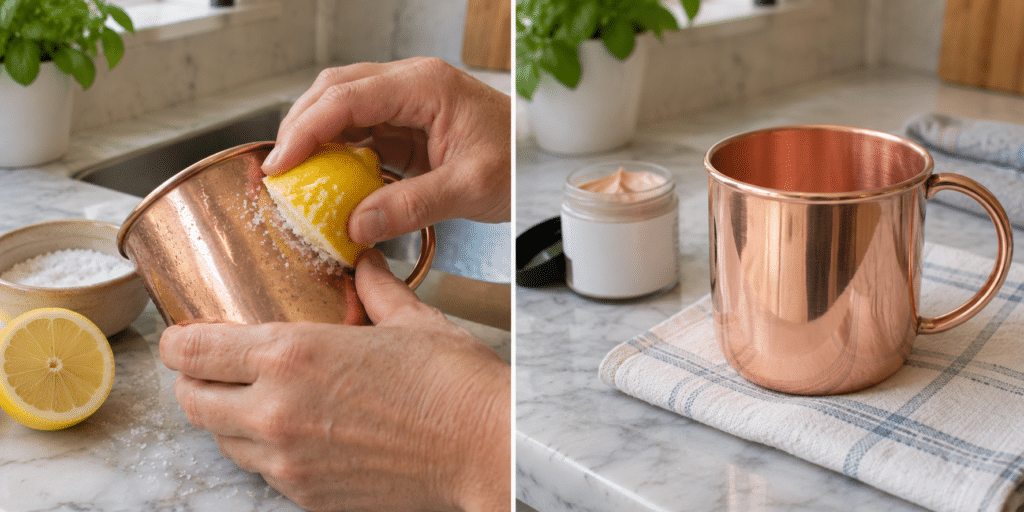
Over time, it is natural for copper to lose some of its shine, darken or develop stains due to oxidation. If you prefer to restore its bright, polished appearance, there are two simple methods.
Method 1 – Lemon and Salt
A simple way to restore copper’s shine requires only lemon and salt.
Coloque uma pequena quantidade de sal numa taça.
Cut a lemon in half or into quarters.
Press the cut side of the lemon into the salt.
Gently rub the copper surface using circular motions.
As soon as the stains disappear, stop rubbing.
Wash immediately with warm water and mild detergent.
Rinse thoroughly and dry completely with a soft cloth.
Important: For utensils with an interior tin lining, use this method only on the copper surfaces. Do not apply lemon and salt to the tin lining.
Method 2 – Copper Cleaner and Polish
If you prefer to use a commercial product, you can purchase a metal cleaner specifically designed for copper from a hardware store or specialist retailer.
Always use the product according to the manufacturer’s instructions and check beforehand that it is suitable for the surface you intend to clean.
We recommend using these products only on exterior copper surfaces. After polishing, wash the item thoroughly with warm water and mild detergent, rinse well and dry completely.
Não aplique limpa-metais sobre o revestimento interior de estanho, salvo se o fabricante do produto indicar expressamente essa utilização.


